What a Wind Mitigation Inspection in Cape Coral Checks.
A look at what a Cape Coral wind mitigation inspection checks
— all 7 sections of the state 1802 form and the credits each one can unlock.
Everything in a wind mitigation inspection ends up on one document: Florida’s uniform mitigation form, officially the OIR-B1-1802, which everybody just calls the “1802.” It’s broken into seven sections and since 2012 each feature has to be backed up with a photo. Once it’s done, it’s generally valid for up to five years as long as you don’t make major changes to the home.
Here’s what those seven sections are looking at, without the insurance jargon.
1. Building code. When the home was built (or when the roof permit was pulled). This sets the baseline for how the rest gets evaluated.
2. Roof covering. What’s on your roof and whether it meets the standards the state cares about. Shingles, tile, metal and other coverings — each has its own criteria and permit history.
3. Roof deck attachment. How the plywood or OSB under your roof is nailed down — the nail size and how closely they’re spaced. Small detail, real difference.
4. Roof-to-wall attachment. How your roof is connected to the walls: toe nails, clips, single wraps, or double wraps and other options. This one is often the single biggest credit on the whole form, and is exactly why an inexperienced inspector missing it is often so costly.
5. Roof geometry. The shape of your roof. A hip roof (sloped on all sides) sheds wind better than a gable, and the form rewards that.
6. Secondary water resistance. Whether there’s an extra sealed barrier under the roof covering to slow water down if the covering itself fails.
7. Opening protection. How your windows, doors, and other openings are protected — impact-rated glass, rated shutters, and so on. This is graded by the weakest opening on the house, so one unprotected window can cap the credit.
 |
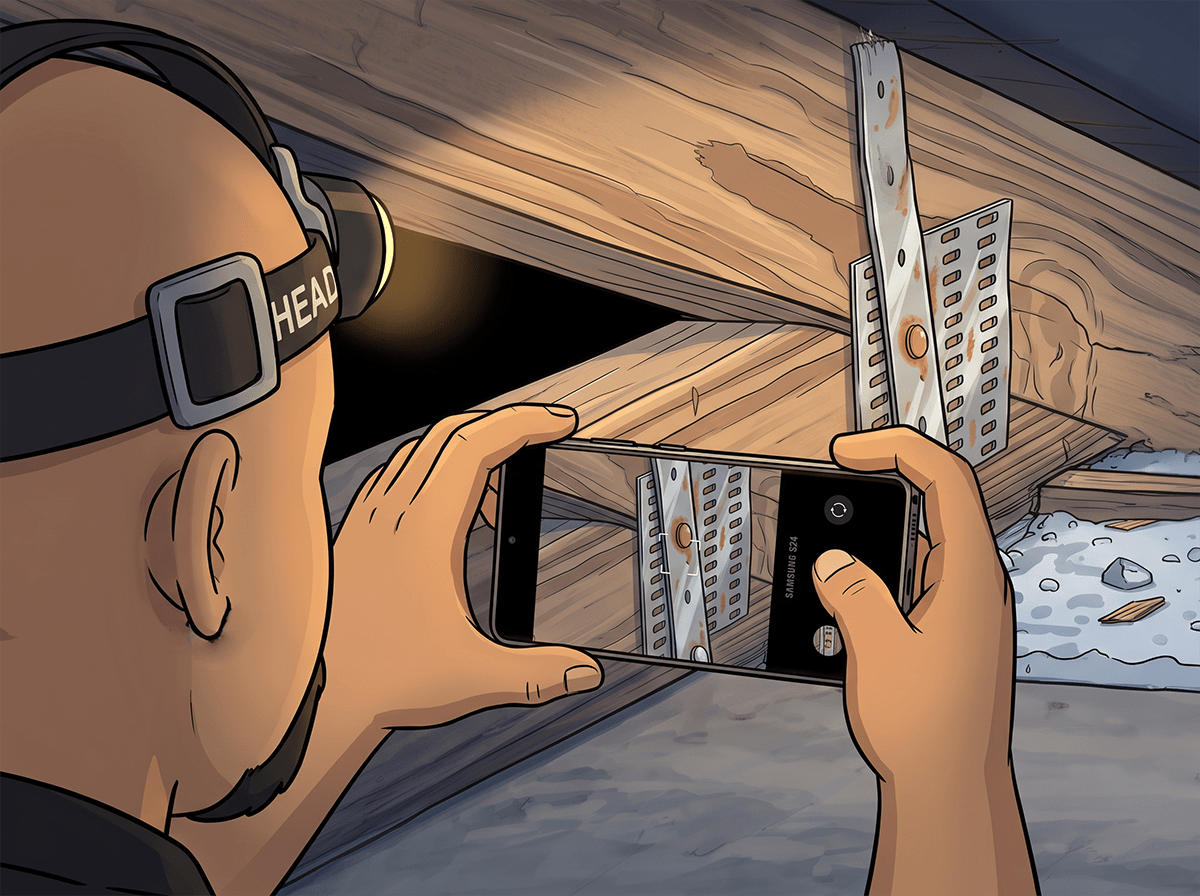 |
The features that tend to move your premium the most are the roof-to-wall attachment, the roof covering and deck, and opening protection. But every home is different, and you don’t really know what you’ve got until someone’s actually up in the attic with a flashlight.
If you want to go deeper than this and learn about the exact nailing patterns, wrap definitions, and how each rating is scored — I keep the full technical breakdown over at wind-mitigation.info. Most people don’t need that level of information, but it’s there for the ones who do or those who are curious.
Ready to see what your Cape Coral or Southwest Florida home qualifies for? Start with a free wind mitigation inspection estimate in under 10 minutes; your finished report comes back by the next business day.